This split is not new. On 22 October 2026 this desk flagged the high-yield spread at its 99.2nd percentile against jobless claims at a seven-year low of 194,000, and asked whether the credit signal was overstating stress or the labor data was underselling it. Neither has moved. Claims still sit at 194,000, a 1.6th percentile reading with a z-score of -1.85, near the bottom of their own year-long range. The credit spread has not narrowed either. If anything the investment-grade spread has joined it, now at 0.91%, its own 98.4th percentile with a z-score of 2.52. Two separate credit markets are flashing the same extreme at once.#
The regime read has shifted from where this desk left it. The macro signal now reads as defensive, with a risk score of 70 and the primary driver named explicitly as credit stress at the 98th percentile with a z-score above 2.5. Elevated volatility is cited as a secondary driver. Equity price action has not caught up. The S&P 500 is up 0.46% over the past month and sits inside its 20-session range, with 20-day realized volatility at only 10.3% of its own scale. The VIX, at 19.45 on 23 October, sits in a contango term structure (VIX3M at 20.48), itself a calm-carry signature rather than a stress one. S&P 500 skew sits near flat and its term slope is essentially zero: no crash premium priced in.#
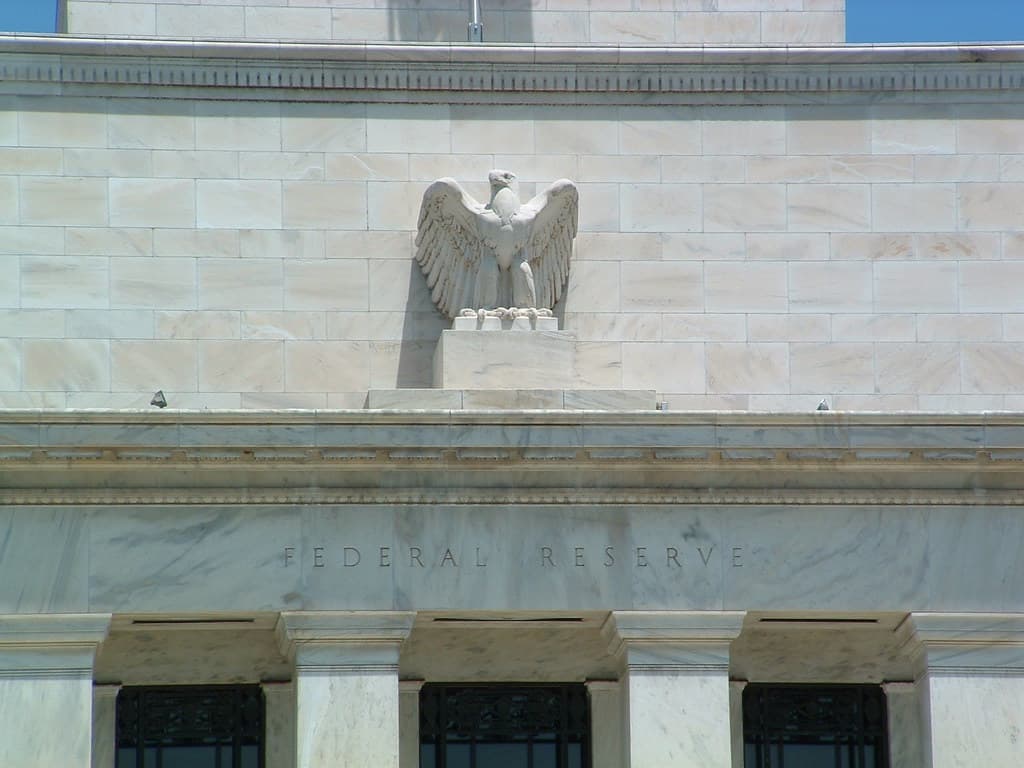
Credit is pricing distress at a 98th-percentile extreme while equity volatility prices calm, and that gap, not either series alone, is what the Fed meeting on 28 October has to resolve.#
The fiscal backdrop adds a second layer of tension rather than resolving the first. Fiscal gravity is flagged as elevated, with Treasury pulling cash and flooding the bond market with net issuance at the same time, according to the desk's fiscal read. The rate-futures curve prices a firmer policy path, not easier: the implied front rate sits at 3.885%, rising to an implied 4.59% at twelve months, a path higher by 70.5 basis points over that horizon, according to Fed funds futures. That is consistent with no cuts priced, not with hikes large enough to explain the entire credit widening. It reads more like inflation risk than default risk. The Federal Funds Rate decision on 28 October carries a forecast of 4.00%, unchanged from the previous reading, and Core PCE Price Index m/m on 29 October is forecast at 0.3%, up from 0.2% previously. A hot PCE print alongside an unchanged Fed would tighten financial conditions through the long end even without a rate move, the channel most directly connected to a widening high-yield spread.#
What this desk cannot yet settle is whether credit is reading something equity volatility has not priced, or whether the widening reflects a narrower pocket of stress, a handful of lower-quality issuers, that has not broadened into the index-level risk the regime score now implies. Credit spreads lead equity vol in some cycles and lag it in others; this pack does not carry the composition data to say which applies here. What would sharpen the read: if the high-yield spread narrows back toward its range ahead of the 13 October acceleration while jobless claims stay near current lows, the credit-stress signal would look like it overstated the deterioration, consistent with the 22 October note's own test. If it instead holds or widens further through the Fed and PCE releases this week while equity volatility stays in contango, that would argue credit is seeing a risk the options market has not yet engaged, and the desk would need to revisit the defensive regime call with the Core PCE print front and centre.#